
Amitabha’s Compassion and the Vigilance of Ordinary Beings──A Settled Mind Without Indulgence; A Grateful Heart That Cherishes Blessings
At the heart of the Pure Land teaching is Amitabha Buddha’s compassionate and unconditional deliverance. This promise holds true for everyone—good or evil, wise or foolish, long established or newly arrived. All who entrust themselves to Amitabha, recite his name single-mindedly, and aspire to be reborn in his Pure Land are embraced by his light and never abandoned. Their rebirth is assured in this very life.
This precious assurance is the final hope for beings seeking liberation from samsara.
Yet without proper context, unconditional deliverance can easily be misconstrued. Some might think: “Since my rebirth is already assured, why should I mind my actions? What harm is there in indulging myself a little?” Others might even go so far as to mistake the Pure Land path for one that tolerates moral failings or encourages wrongdoing.
It is not Amitabha’s compassion that fosters laxity, but our tendency to turn his mercy into an excuse for self-indulgence. Amitabha’s Fundamental Vow is pure and complete; it is our personal flaws and cravings that are skilled at finding justification.
For this reason, Pure Land faith must balance two inseparable truths:
- Regarding rebirth: Deliverance depends entirely on the Other-Power of Amitabha’s Fundamental Vow, unconditioned by our virtue, cultivation, or merit.
- Regarding daily life: Genuine faith naturally makes us grow in humility, act with moral sensitivity, feel deep gratitude, and cherish our blessings.
The first is Amitabha’s compassionate deliverance; the second is our response of gratitude. The first settles our mind; the second keeps that settled mind from turning into complacency. Humility, moral restraint, and cherishing our blessings are not conditions for rebirth—they are the natural expression of a life touched by unconditional compassion.
1. When We Feel Secure, We Easily Lower Our Guard
It is human nature to relax our vigilance once we feel safe and assured. We may even begin to reward and excuse ourselves.
We think: “I worked out for an hour today, so eating a bit more tonight won’t hurt.” Or: “I’ve been so good lately, I deserve a little treat.” Or even: “My parents will always love me, so I can do as I please.”
In the same way, when we hear that Amitabha Buddha will surely deliver us, but lack a true awareness of our flawed nature, a quiet thought creeps in: “Since I'm safe anyway, I don't need to be so strict with myself.”
This is not caused by faith itself. Rather, ordinary beings will use any excuse to defend their greed—even turning Amitabha’s compassion into a justification for self-indulgence. Therefore, what we need to guard against is not Amitabha’s compassion, but our own talent for self-deception.
2. A Settled Mind Always Contains Contrition
When we truly entrust ourselves to Amitabha’s compassion, we do not become self-indulgent. Rather, the more deeply we experience his unconditional acceptance, the more humbled and contrite we feel. Knowing that Amitabha will never abandon us, we are even less willing to take his kindness for granted or let our conduct become loose.
A practitioner thinks:
“Amitabha Buddha still embraces an ordinary, flawed being like me. Even though I can never repay his immense kindness through my own cultivation, the least I can do is remain humble, cherish my blessings, and try not to give in to my bad habits.”
This is the true settled mind of a Pure Land practitioner.
If someone thinks, “Amitabha will save me anyway, so I can do whatever I want,” this is not gratitude—it is exploitation. It is not genuine acceptance of the Buddha’s Primal Vow, but using the Vow as a shield for our desires.
Gratitude and exploitation may both speak of compassion, but inwardly they move in opposite directions. Gratitude makes us gentle, humble, and mindful of our blessings. By contrast, exploitation leaves us self-indulgent and tied to our desires.
3. Gratitude Is the Bridge Between Doctrine and Daily Life
Some spiritual communities encounter problems over time, not because their teachings are flawed, but because a crucial bridge between doctrine and daily life is missing.
If the message stops at, “The Buddha is compassionate, so my mind can be at ease,” while gratitude and contrition are absent, peace of mind degrades into complacency.
The natural inner process should be:
- Because Amitabha is compassionate, my mind is at ease.
- Because Amitabha never abandons me, I am filled with gratitude.
- Because I am grateful, I feel humbled and contrite.
- Because I am contrite, I learn to cherish my blessings.
- And because I cherish my blessings, self-restraint follows naturally, bringing contentment with few desires.
Amitabha’s deliverance does not increase or decrease according to the good or evil of sentient beings. Yet those who truly receive his kindness are gradually transformed by it. Although afflictions remain and habits run deep, practitioners become gentler, humbler, more aware of their shortcomings, and kinder to others.
These qualities do not purchase deliverance—they are simply the natural expression of gratitude for deliverance already received.
4. The Two Kinds of Deep Faith Keep the Practitioner Balanced
Master Shandao’s teaching on the Two Kinds of Deep Faith safeguards Pure Land practitioners from falling into error.
Deep Faith in Amitabha Buddha means deeply trusting that Amitabha’s Fundamental Vow is true and unfailing. By reciting the Buddha’s Name exclusively and relying on the power of his Vow, our rebirth is assured. Because of this, the practitioner no longer doubts or fears; the mind becomes peaceful and settled.
Deep Faith in Our Karmic Condition means deeply recognizing that we are ordinary beings burdened by heavy karma, bound to samsara since time immemorial with no power to free ourselves."
Because of this, practitioners do not become self-righteous, look down on others, or dare to give free rein to their afflictions.
This recognition is not meant to produce inferiority or despair—it is honest self-knowledge. It allows us to see that greed, anger, delusion, pride, craving, jealousy, and selfishness do not vanish merely because we have heard the Dharma or accepted Amitabha’s deliverance.
Therefore, we must regularly examine our thoughts, guard against afflictions, and never allow desire to grow under the cover of the Dharma.
Deep Faith in the Dharma keeps us from doubting the Buddha. Deep Faith in Our Karmic Condition keeps us from overestimating ourselves.
If we have only Deep Faith in the Dharma, we may mistake a settled mind for complacency without vigilance. If we speak only of our karmic condition, we may fall into self-blame and despair. When both are held together, we are assured yet humble, free from fear yet never self-indulgent.
5. The School’s Ethos Protects Ordinary Beings
The ethos of the Pure Land school is not merely an external code of conduct or a means of managing a community. It is a living environment that protects ordinary beings from the growth of afflictions.
The minds of ordinary beings have familiar tendencies:
- When respected, we easily grow proud.
- When supported, we easily become attached to comfort.
- When trusted, we easily lower our guard.
- When shown compassion, we easily take it for granted.
- When forgiven, we easily excuse our mistakes.
- When life is stable, we easily seek greater indulgence.
- When material conditions abound, we easily lose the contentment of simple living.
The role of the school’s ethos is to continually guide us back to a healthy state of mind: from pride to humility, from seeking enjoyment to cherishing our blessings, from laxity to contrition, and from self-centeredness to grateful recitation of the Buddha’s Name.
When the community encourages simplicity, plainness, few desires, contentment, and joy in the Way, it is not denying Amitabha’s compassion or adding conditions to the Fundamental Vow. It is recognizing the nature of ordinary beings and helping prevent the five desires from growing unchecked.
Monastics in particular receive the respect and offerings of faithful donors from all directions. They should always remember: every bowl of rice and every robe carries the labor, trust, and causes and conditions of others. If one enjoys these offerings without gratitude, restraint, and contrition, one's spiritual heart can gradually be eroded by comfort.
Therefore, cherishing blessings is not stinginess. Restraint is not harshness. Simplicity is not deprivation. They are ways for ordinary beings to protect themselves, honor the gifts of donors, and cherish the trust placed in the community.
6. Unconditional Deliverance Is Not Permission for Self-Will
We must clearly distinguish between the means of rebirth and the practitioner’s manner of life after receiving the Buddha’s kindness.
Amitabha’s unconditional deliverance concerns the Dharma by which rebirth is attained. The practitioner’s humility, proper conduct, cherishing of blessings, and self-restraint concern the grateful life that follows.
We must not turn gratitude and cherishing blessings into conditions for rebirth; otherwise, we lose the meaning of Other-Power. But we must also not use unconditional deliverance to dismiss the humility and restraint that naturally flow from gratitude.
Amitabha Buddha delivers ordinary beings full of afflictions, but he does not praise their afflictions. He embraces beings who create harmful karma and suffer, but he does not encourage them to continue doing wrong.
Just as a loving mother’s unconditional love for her child does not mean she approves of wrong behavior, children who truly understand her love will not deliberately hurt her simply because they know she will never abandon them.
Likewise, the teaching that “even evil beings can be saved” reveals the vastness of Amitabha’s compassion; it is not an encouragement to do evil. The teaching that “ordinary beings can enter the Reward Land” reveals the inconceivable power of the Buddha’s Vow; it is not a license for ordinary beings to become self-indulgent.
7. A Settled Mind and Contrition Belong Together
While spreading the teaching of Amitabha’s unconditional deliverance, the Pure Land tradition should continually remind practitioners:
- Entrust yourself to Amitabha’s deliverance, and cherish the blessings you receive.
- Rest assured in your settled mind, yet never forget humility and contrition.
- Be embraced by the Buddha and free from fear, yet know your flawed nature and never become complacent.
A mature Pure Land faith possesses two strengths at once. On one hand, practitioners deeply trust that they are embraced by Amitabha and will never be abandoned; therefore, their heart is peaceful and settled. On the other hand, they deeply know that they remain ordinary beings burdened by afflictions; therefore, they remain humble and self-guarded.
Assurance without contrition degrades into complacency. Contrition without assurance falls into self-blame. When assurance and contrition support one another, the life of faith becomes steady, gentle, and noble.
- When a person meets compassion with gratitude, cherishing blessings arises naturally.
- When a settled mind contains contrition, restraint follows without effort.
- When deliverance is lived out in daily life, it becomes humility and kindness.
A reciter of Amitabha’s Name who possesses the Two Kinds of Deep Faith knows that rebirth is assured, yet does not become lax; is embraced by the Buddha’s light, yet does not become self-satisfied. The more deeply such a person knows the Buddha’s kindness, the more humble, grateful, and content they become in their proper place.
As Master Shandao exhorts at the end of his Hymns in Praise of Pratyutpanna Samadhi:
“Always keep humility and contrition in your heart, and look up in gratitude for the Buddha’s kindness.”
These words express the most dignified way for a reciter of Amitabha’s Name to live after receiving his compassion.
The Dharma is like a mirror. Before a mirror, we see our face; upon hearing the Dharma, we come to know our heart.
If we turn away from the Dharma mirror, we may think ourselves virtuous and good, becoming arrogant and looking down on others. But when we face the Dharma mirror, we see that our flawed nature has no bottom, and we feel deeply humbled, knowing we have nowhere to hide.
Yet though the evil in my heart has no bottom, Amitabha’s power has no limit. To trust our karmic condition and to trust the Dharma—these two are one.
This is the inner life of a Pure Land practitioner: seeing oneself clearly, one does not become arrogant; looking up to Amitabha in trust, one does not fall into despair. With this inner life, humility, joy, and gratitude naturally arise. And from such a heart comes the spontaneous recitation:
Namo Amituofo!
Namo Amituofo!
Namo Amituofo!
(Translated by the Pure Land School Translation Team;
edited by Householder Fojin)
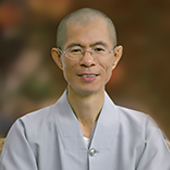
Master Huijing
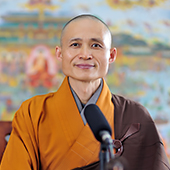
Master Jingzong
Guiding Principles
Faith in, and acceptance of, Amitabha’s deliverance
Single-minded recitation of Amitabha’s name
Aspiration to rebirth in Amitabha’s Pure Land
Comprehensive deliverance of all sentient beings