
The Shared-Fate Bird: a Lesson in Compassion
The Amitabha Sutra tells us that in the Land of Ultimate Bliss there is a bird called the shared-fate bird — with two heads on a single body. Two separate lives, two storehouse consciousnesses, two minds, yet bound together in one body.
In truth, we and Amitabha are like that bird — two lives in one body, inseparable.
On our own, we cannot clear away our karmic obstructions and escape samsara, nor accumulate enough merit to swiftly attain Buddhahood. But Amitabha can. He regards us as himself, and what we cannot do, he does for us.
This is the defining feature of the Pure Land school — the hallmark of its distinction.
As Pure Land practitioners, reciting Amitabha’s name and seeking rebirth in his land, the first thing we need to understand is what kind of Buddha Amitabha is. Do we know his mind, his compassion, and what kind of relationship he has with us?
Amitabha regards us as himself — "he looks upon all beings as he looks upon himself." This is the very heart of Buddhism: unconditional compassion that relieves suffering and brings joy, born from the recognition that all life is one. Yet here we are, reciting "Namo Amitabha" day in and day out, seeking rebirth in his land — and still we don't truly see him as this kind of Buddha. It would be like a child calling out "Mom! Dad!" every day while treating them as strangers, not his own flesh and blood. Could that ever be a real parent-child relationship? Of course not.
So we must truly feel the Buddha's heart — trust in his great compassion, accept the salvation of his great vow — and then recite his name.
Think of a stone placed on a boat. Whether it is a massive boulder or a grain of sand, once it rests on the boat it will not sink—it will reach the far shore. This has nothing to do with its size or number. It has everything to do with it being on the boat.
The same is true for us. It all comes down to one thing: are we on the ship of Amitabha’s Great Vow? If we are, it doesn’t matter that we can’t practice or have no merit. The Avatamsaka Sutra says our evil karma may be so vast that all of space cannot contain it — even that is no obstacle. We will be carried free of birth and death, reborn in the Land of Ultimate Bliss, and swiftly attain Buddhahood.
Therefore, liberation does not depend on whether we know how to practice. Rather, it depends on whether we trust in Amitabha’s compassionate salvation.
(Translated by the Pure Land School Translation Team;
edited by Househouler Fojin)
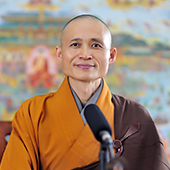
Master Huijing
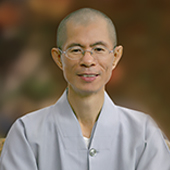
Master Jingzong
Guiding Principles
Faith in, and acceptance of, Amitabha’s deliverance
Single-minded recitation of Amitabha’s name
Aspiration to rebirth in Amitabha’s Pure Land
Comprehensive deliverance of all sentient beings